Thursday, 12 March 2015

How to write Poetry the quick and fun way: 'The Ten Minute Poetry Challenge'!

Writing Poetry the quick and fun way:

The Ten Minute Poetry Challenge!


I stumbled upon a poem called ‘Good Books’ by Edgar Guest while sitting in my dentist’s waiting room this morning and it made me realise something: I haven’t written - or even read - a single poem in ages!

So, while I was sitting there I decided to try a ‘Ten Minute Poetry Challenge’ (I’m sure I’m not the first person to have such an idea ;-).

It involves having 30 seconds to quickly think of a topic and decide on which type of poem you’re going to write, and then use the rest of the ten minutes to actually write the poem. Try to give yourself at least a full minute before the end to read through and check for any basic errors. Then think of a title and hey presto, your poem is born!
And remember, while you are writing poetry, you are a poet. Maybe not a professional one, but at that moment you’re a poet nonetheless!

Here is my effort from the waiting room earlier today, called ‘Remember Your Shadow’:

Shadows are scary when you don’t know
What they belong to or where they’ll go
They change shape throughout the day
They have no name but they never stray
Yet they disappear in the dark
And it’s difficult to see one from a shark
Shadows follow you around the park
But they never ever leave a mark
You’re never alone when you’re with your shadow
But people forget, or just don’t know
Sometimes they walk right over it
Even if they didn’t mean to do it
You can make your shadow climb the wall
Or use it to make your hands into a ball
Watch it grow across the hall
Rise up to the ceiling, then quickly fall
Shadows can change
You can watch them rearrange
They can warn you
They can cover you
They can shelter you
They can scare you
Some have two heads
They can even have three legs
Others look like giant birds
Or like buffalo travelling in herds
Well, my ten minutes have now passed
No more shadow poetry will I cast
After reading this, please remember your shadow
It’s the one thing that sticks with you, wherever you go...

If you think this one isn't so bad, there a couple of 'bonus poems' I spent more than ten minutes on in my 'Smell of Poo' Children's Story Book Collection, here:
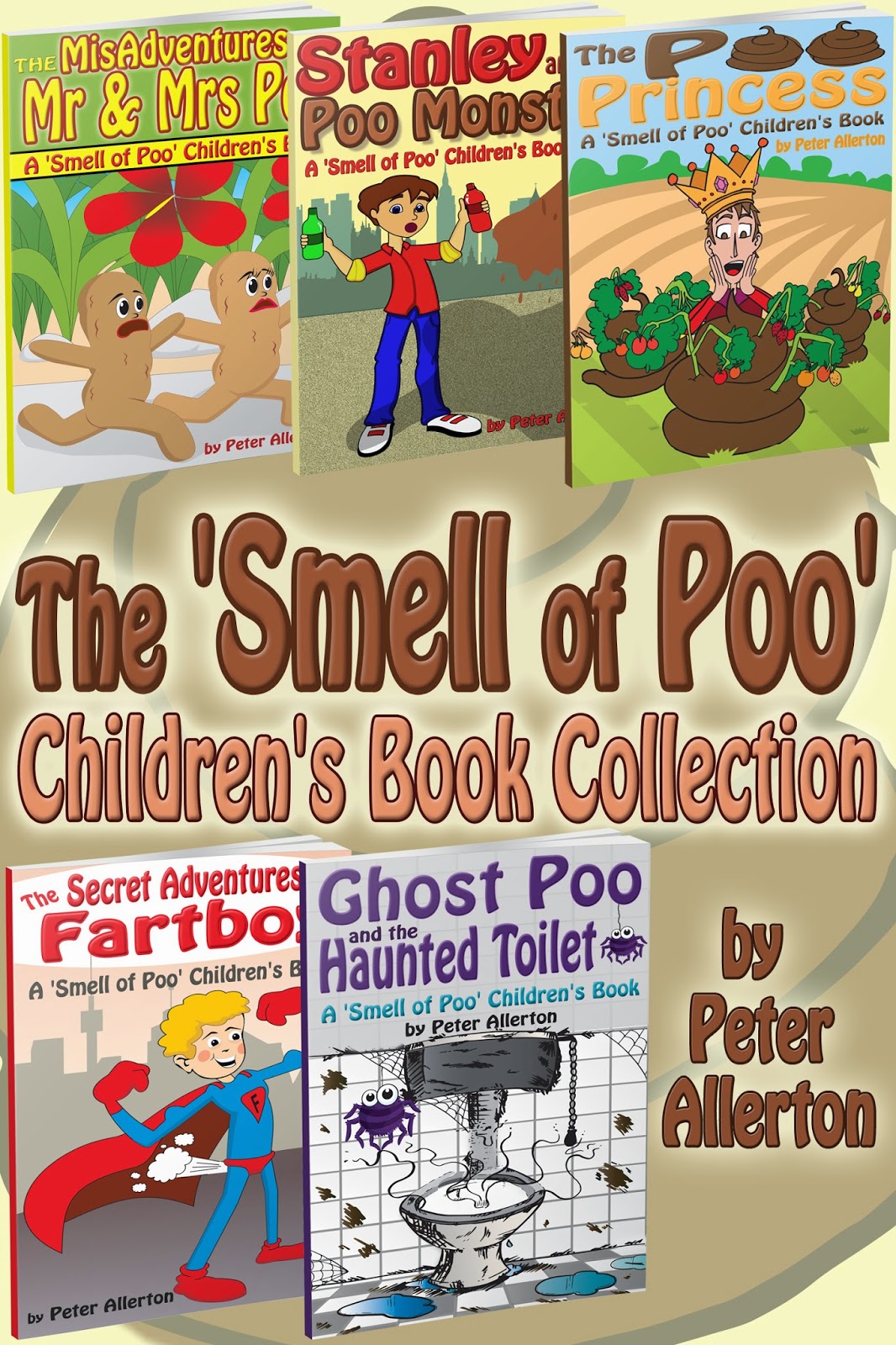
'The Smell of Poo' poems: 'Your Poo & You' + 'Who Dunnit?'
'The Smell of Poo' poems: 'Your Poo & You' + 'Who Dunnit?'

Coming from Liverpool, I’ve always been aware of poetry and a ‘poetry scene'. I think it takes courage to recite your own work in public. Here’s what happened when writer Marcel Theroux – son of acclaimed travel author PaulTheroux and brother of brilliant TV journalist Louis Theroux – came to Liverpool to write and perform some poetry:
Marcel Theroux tries live Poetry in Liverpool


liverpool poets poetry scene
Liverpool Poets

Here are some other links that might help inspire you:


Why not have a go at the ‘Ten Minute Poetry Challenge’ and share your work here? You can do it anywhere, whether in your break at work or school, while sitting on the sofa at home, or even when you stop along the way outside wherever you are, be it a park, cafe, waterfront, you name it..

Let your surroundings inspire you. You don’t even have to read it to anyone, just have fun with it, it’s a great creative outlet – though the trickiest thing can be rhyming, in which case you can cheat a little by visiting here:

poetry poems rhyme zone
Find a rhyme at the Rhyme Zone

If you want a few hints and tips, go to the ‘For Poets’ page to help start you off...

writer's guide to Poetry
The writer's guide to Poetry

Take care, enjoy, and happy writing!!!


Thursday, 5 March 2015

Top Ten Tips for Meditation

Top Ten Tips for Meditation:

meditation tips guide stress therapy
Meditation - not as simple as it sounds..!

Recently the woes of the world have been playing on my mind. An unfair society, violent crime, worries over loved ones, and so on. I’m usually quite ‘happy go lucky’ – but in a world that at times can be so cruel, it’s not always easy! So recently a good friend of mine recommended I gave meditation a go. It sounded a good idea and once I looked into it, I wondered why I’d never really tried it before.

Everyone probably has need for it, yet most of us never seem to have the opportunity – or rather the patience – to meditate.  Personally I’ve always used exercise or hanging out with friends to escape any deeper concerns or issues I might be having, but that is still just an escape and lately it hasn’t quite been doing the trick.
meditation tips guide stress therapy

However, my first attempt at meditation was a bit of a disaster – in fact I had to quit before I went mad! It seemed that the more I tried to ‘empty my mind’, the more negative nonsense kept popping into it. I suppose if it was easy we’d all be doing it and the world would be a better place. Still, I’ve tried to keep going and have actually been having some very mind-opening experiences of late, especially at night when I end up just looking at the stars for a while after the meditation – feeling more ‘at one with the universe’ if not with the planet I’m actually living on!

meditation tips guide stress therapy
Meditation can open your mind while calming it down...

Anyway, I’ve been researching it a bit and tried to ‘boil it down’ to the most useful tips I could find. Handy links with more detailed guidance follow below...

1)            Sit still and tall

You need to be comfortable but not too comfortable because you still need to be aware of your surroundings and not in danger of dozing off!

2)            Relax


Close your eyes and scan through the different parts of your body, from your toes to the top of your head, relaxing each one and then moving on to the next. Remember, nobody expects anything from you in this process, ideally yourself included.

4)            Breathe 

Breathe naturally until fully inhaled / exhaled: ‘follow your breath’ in your mind.

3)            Cleanse your 'chakras'


Breathe in the ‘clean energy’ from the Earth. Breathe out anxiety and stress. Purify your chakras by doing this with each one (see the link about chakras below if you’re not too sure about this part). The position (apparently) of your Chakras:

                              Tail bone (root chakra)
                              Stomach
                              Diaphragm
                              Chest
                              Throat
                              Middle eye         
                              Top of head

                   Keep your palms open, supposedly that’s good for energy flow...

 5)            Remain silent

Be aware but don’t react to or try to change anything. If you hear a sound, don’t ‘name it’ in your mind.

6)            Repeat your 'mantra'

Repeat your mantra with each breath. For example, “I am breathing in / I am breathing out”, or “Let it go” or whatever you like, but keep it simple...

7)            Keep a calm mind

Don’t dwell on any thoughts that may pop into your head. You can acknowledge them, but then just continue focusing on your breathing and your mantra if you’re using one. Keep an ‘empty mind’ – this is the greatest challenge for me, the more I try to relax (‘trying’ to relax is probably the problem) the more silly thoughts pop into my head – even more than usual! But anyway, don’t give up, a new calmness might end up taking you by surprise...

meditation tips guide stress therapy

8)            'Wake up' slowly...

When you choose to ‘wake up’, slowly wiggle fingers and toes, and then gradually get up.

9)            Find the time 

Find the time to do this every day – even if it’s for just 5 minutes. It sounds easy, but I’ve found it takes more self-discipline than I expected!

10)         Find a place

meditation tips guide stress therapy
Meditating in nature - as ideal as it seems?

You can supposedly meditate anywhere – ideally in nature. However, that might not be so realistic for some people. Even if you do find a place where nobody disturbs you, you might still feel a bit silly if you’re not in the comfort and safety of your own home. I tried to sit on a hill by the sea the other day, it was great for a minute or so but then I kept on imagining somebody creeping up behind me! Then again, I guess I didn’t help myself by watching ‘Constantine’ – a spooky TV series about a Liverpool trickster with supernatural powers –   just before heading off to meditate!

john constantine hellblazer liverpool
Constantine - probably not the best thing to watch just before meditating!

I know it all sounds very nice and healthy but it's actually been quite a challenge of sorts. If it’s difficult for you too, all I can really say is follow the steps and don’t give up! What’s the worst that can happen from trying this anyway..?

Of course, if you’re still struggling and there’s something that’s really bothering you, perhaps meditation isn’t the way to go? You could try counselling, such as Cognitive Behavioural Therapy, or try taking some action over your perceived problems if at all possible – you might just find you're worrying too much..!

meditation tips guide stress therapy
Good advice...

Incidentally, if you need to meditate to help you relax before falling asleep, this ‘blue energy technique’ seems quite good (though I’m yet to find a good method to help me get back to sleep in the mornings – if you know of any, please share it in the comments section below!).

Here are some other useful links on the practice of meditation, including advice from esteemed thinkers such as Ekhart Tolle and a guru of Vipassana:


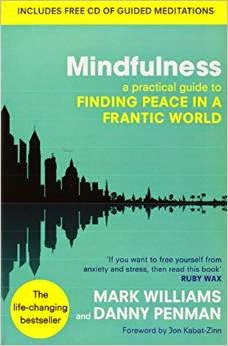
For books on Meditation, here are a few suggestions:


If you have children and they are disturbing your attempts to meditate, why not encourage them to read one of my stories while you practise (there's even a set of 'follow-up' questions for them to answer after each one, so you can read their answers with them when you're both done ;-):
If you're still finding it difficult to escape the 'reality' of everyday human existence, consider this: On Earth, you are presently spinning around at 1700 km per hour, while the Earth is orbiting the Sun at 108,000 km per hour. The Sun in turn is orbiting around the Milky Way galaxy at 790,000 km per hour (on a journey that takes around 200 million years to complete just one orbit), while the Milky Way is rushing through space at around 3,600,000 km per hour. It's all a bit hard to imagine while you're 'sitting still', but it provides a very different perspective does it not?

Anyway, I hope you found these hints and tips useful. A peaceful mind makes for a more peaceful world – hopefully... Good luck.


Monday, 23 February 2015

Top Ten Most Amazing Science Facts Ever!

Top ten best ever science facts:


Watching Big Bang Theory recently got me back into the incredible world of science. I loved watching Cosmos: A Spacetime Odyssey and went out and bought books on natural history, human history, geography, space, science and human biology.

cosmos-a-spacetime-odyssey tv series
Cosmos: A Spacetime Odyssey - one of the best documentaries ever!

Once I finally took some time out to enjoy reading them, I realised they were more amazing than any work of fiction – though it’s too bad I can’t remember most of what I’ve read! These facts come from a book that I believe should be on everybody’s shelf, Miles Kelly’s Space Encycolpedia. Concise but relatively comprehensive, I picked it up for a bargain at 'The Works':

Science Fact 1: Too small to believe

You can fit 2 billion atoms inside the full stop at the end of this sentence. See how many words Doctor Gremlin can fit inside a full stop in his Battle of the Brats here:

Doctor Gremlin Battle Brats funny children's book
Doctor Gremlin and the Battle of the Brats!

Inside each atom is mostly empty space with a few even tinier subatomic particles inside – if an atom was the size of Anfield Stadium, its nucleus would be smaller than a Subbuteo football!

Anfield from the air
Anfield from the air - on a subatomic level!

Science Fact 2: Driving on dinosaur juice

Mineral oils come from petroleum, which if formed under the ground over millions of years and made up from the bodies of tiny marine organisms like plankton – so the next time you’re in a car, just think, the engine’s being run on the remains of ancient creatures! Petroleum can also be used to make anything from DVDs to toothpaste!

Science Fact 3: A world without colour

Light travels in the form of photons. If you point a pin at the Sun, a thousand billion photons would hit the pinhead in a single second! When light shines on things, it makes them look like various colours because molecules in their surfaces reflect and absorb particular wavelengths of light.

beautiful colours
Beautiful colours... but are they real?

Science Fact 4: Robots inside us

Scientists are now designing nanobots (microscopic robots) which might actually be able to perform surgery inside someone’s body in the future. An electron microscope can focus on something just 1 nanometre (a billionth of a metre) and enlarge it 5 million times!

Science Fact 5: Deadly medicine

Of the 118 known elements in the Periodic Table, the heaviest are actually man-made.

Periodic Table

About 75% of elements are metals; iron is the most common while Mercury is the only one that is liquid at normal temperature and melts at -39 degrees – the first Emperor of China – the remarkable Qin – drank it to help make him live longer but it ended up killing him:

Qin: First Emperor of China

Hydrogen is the lightest element – a swimming pool full would weigh just 1kg – but it is the oldest element and still makes up 90% of the weight of the universe!

Science Fact 6: Colder than ice

When you hear someone cracking their knuckles, the sound you hear is actually bubbles of nitrogen gas popping inside fluid in the joints! Nitrogen becomes liquid at -196 degrees Celsius and is so cold it can be used to make ice cream – you can watch people make it sometimes at fancy restaurants:

Liquid nitrogen: making ice cream

Science Fact 7: Good vibrations

Sound is actually vibrations in the air. If you inhale helium gas, your voice becomes high-pitched because sound travels much faster in helium. It also travels much faster than air in liquids and even more so in solids. Here is an example of how your voice can travel differently through different things:

Science Fact 8: Keep your brain moist!

Water usually boils at 100 degrees Celsius but at the top of Mount Everest it takes just 68 degrees because air pressure is lower there. 85% of your brain is made up of water, as is 33% of your bones – so make sure you keep yourself hydrated or your brain will shrink!

Science Fact 9: Underwater elephants

Pressure is measured in ‘Newtons’ per square meter. The pressure at the center of the Earth (inside its core) is around 400 million Newtons, while a shark’s bite is 30 million. At the other end of the scale, the quietest sound measures 200 millionths of a Newton, while sunlight has a pressure of 3 millionths of a Newton! Water pressure at the bottom of the ocean (about 10km deep) is the same as having 7 elephants standing on your head:

Visit the bottom of the ocean: Imagine 7 elephants on your head!

The fluids inside our body have their own pressure and without them we would be crushed by the air around us!

Science Fact 10: Too hot to handle

A campfire burns at around 800 degrees, lava from a volcano at 1200. The surface of the Sun is 6000 while the Earth’s core is even hotter at 7000! However, lightning strikes at 30,000 (turning the air around it into plasma!), a murderous Hydrogen bomb can cause heat of over 40 million degrees and a Tritium bomb over 400,000,000!!!

Lightning turning air to plasma!


Well, I hope you enjoyed learning something amazing today – all we have to do is pick up a book, watch a documentary or even just go for a stroll around a park and take in some of the weird and wonderful things all around us. There must be other forms of life all around our unimaginably vast Universe, but that doesn’t make what we have right now on Earth any less miraculous in itself...


Wednesday, 11 February 2015

'League of Disgusting Gentlemen' children's book is out now!

'League of Disgusting Gentlemen' children's book is out now!


The latest story from the 'Beastly Bullies' children's book collection has just been published. It is now available through Amazon:


league disgusting gentlemen children's kindle ebook
League of Disgusting Gentlemen: Available Here


Helen has a big problem. She must help her dad become the next President of the League of Disgusting Gentlemen, but to do so she first has to win the most disgusting contest there has ever been! The question is... can she do it?

Follow Helen as she tries to do the right thing while being stuck in a totally disgusting situation in this funny children’s chapter story book for Middle-Grade Primary School kids to enjoy. Parents and teachers might like reading this humorous story too (which also features Follow-up questions) while it’s suitable for both newly confident and reluctant readers.

For ages 8 to 13 (14000 words)

Here’s an excerpt from the beginning of Chapter One:

‘Let’s get out of here!’ she pleaded. But I couldn’t move. There I was standing on a bus, looking at some old lady’s teeth lying in a puddle of sick. I had the taste of the stink bomb still in my mouth and the sound of people vomiting ringing in my ears, while everyone else just stared at me as the driver shouted at us to get off. I shut my eyes for a moment. How did it come to this...?

*  *  *

It all started at my dad’s club. Only bad things ever seemed to start at that club. I don’t know why he loved it there so much. Maybe it was because when he was there, he could be himself. I mean truly be himself. Burping, farting, swearing, drinking, smoking, telling rude jokes, play-fighting with friends – all the things he enjoyed when he was younger but couldn’t anymore ‘because of society.’ That was what he’d always say. ‘It’s society’s fault!’ So he used to go to his club, every Friday evening, just to be disgusting with his disgusting friends.

The 'League of Disgusting Gentlemen' Beastly Bullies story is available on Amazon:


Wednesday, 28 January 2015

Writing a New Book & the Poverty Gap between Rich and Poor!

A New Book is on its way:

'The League of Disgusting Gentlemen' will be out soon!


My apologies for the lack of new posts the previous week, but guess what – I’ve been writing again!

The next ‘Beastly Bullies’ Children’s Book is in the process of being written. It is suitably titled ‘The League of Disgusting Gentlemen’.

It tells the tale of two horrible rivals who must compete in a disgusting contest to see who will become the next President of ‘The League of Disgusting Gentlemen’. However, things soon get out of hand as they bribe their own daughters to get involved in the struggle, as things become increasingly disgusting and even rather dangerous.

I don’t want to give too much away as it is still a ‘work in progress’, but it will be my lengthiest ever book and I am writing it for 9 to 12 years olds (although younger advanced readers or young teenagers might also like it).

So, watch this space – ‘The League of Disgusting Gentlemen’ will be out in the next month or so! In the meantime, you can enjoy reading the first release in the ‘Beastly Bullies’ Children’s Story book collection: ‘DoctorGremlin and the Battle of the Brats’, available on Amazon:


The Gap Between Rich and Poor: it's Growing!


This rather disturbed me so I then did some extra research into the gap between the ‘rich and poor’, I soon discovered that the wealthiest 85 people in the world have more money than the poorest 3.5 billion(!!!), as the BBC tells us here: 

I ask you, is this acceptable? It affects all of us, not least our children! It is most worrying that some of the richest people in the world don’t seem to care at all about the poorest.


To make things worse, by 2016 apparently the top 1% of people on Earth (‘top’ meaning financially, not spiritually!) will own more than the other 99% of humans combined. Inequality is apparently as bad as it’s ever been. You can read more here:


A couple of good books about how the rich selfishly keep on getting richer and how the rest of us must struggle to avoid becoming poorer as a result are:


Hand to Mouth is written by the inspiring Linda Tirado (whom I have seen speak very eloquently about how someone very poor can be much more intelligent than somebody who is very rich. We are who we are, not what we have!).

perkins confessions economic hit man
A firsthand account of international abuses of power

Confessions of an Economic Hit Man by John Perkins – a ‘behind the scenes’ look at how rich countries exploit poor ones and keep their ‘fat cats’ rich and everyone else without financial freedom.

***

Well, I hope you’re not too depressed after reading this sad pause for thought on the state of the world and its ‘haves and have nots’. But if you are, you could try cheering yourself or your kids up with one of my books – (sorry, I have to suggest it):

humorous kids' book
Cheer you or your kids up with a book

I looked for some good resources for kids on the topic of the wealth of the world (or lack of it) but, I couldn't find any! If you know of any, please share them with us in the comment box, thanks. In the meantime, I plan to read this book if I can find the time:

wealth poverty nations landes
Wealth and Poverty - a description

Ok, thanks for reading and take good care of yourselves. I hope to be back soon with some Scientific Facts to blow your mind (or at least cheer you up – it’s easier not to worry too much about the world of humans once you know how big the Universe is or how small a photon is!)!


Saturday, 17 January 2015

Top Ten Amazing Space Facts

Top Ten Amazing Space Facts!

(Boost your general knowledge!)


I’ve had my nose buried in the books this week, as I’ve somewhat belatedly rediscovered my love for science (which has luckily coincided with writer’s block!).

My only regret is that I didn’t study this stuff more when I was younger (hating being stuck in school was probably one reason for that – ironic isn’t it!), as now my memory is rather damaged...

At least I suppose one benefit of having a poor memory is being able to enjoy the same thing again and again, like when my mother watches repeats of murder mysteries on TV as she can never remember ‘who dunnit’ in the first place!

Currently on the tables next to my bed, sofa and in the kitchen are the following brilliant books:

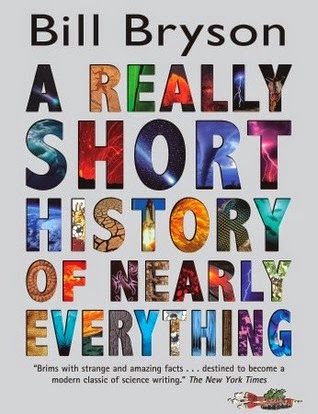
‘History Year by Year’ and ‘The Natural History Book’ from DK Publishing, the ‘Space’, ‘Body’ and ‘Science’ Encyclopedias from Miles Kelly, and (also highly recommended) Bill Bryson’s 'A Short History of Nearly Everything' – no other book is as informative and amusing at the same time!


Some of the things I’ve recently learned from the above books are just as remarkable as anything I’ve ever read in any fiction.

Over the next few weeks I’ll be sharing this information with you in the form of the 'Top Ten Amazing Facts' that I can find, starting today with the ‘Space Encyclopedia’ which covers everything from unimaginably small electrons whizzing around inside atoms to clusters of galaxies spreading out over trillions and trillions of kilometers.

It also tells us about the Earth, what it’s made of, its atmosphere, the tides, you name it! For instance, have a chew on these amazing space-related facts...

A Concise Space Encyclopedia


Top Ten Space facts


Space Fact 10: Crazy Cosmonaut

Cosmonaut Valeri Poliakov spent 437 consecutive days in space! He couldn’t even walk when he landed back on Earth because of the return to gravity. If the air pressure on his spacecraft were to break, his blood would have boiled! To remain in orbit 200km above Earth, he had to fly at 8 km per second. Check out this clip of footage taken by astronauts from space:

Footage of Earth from space

Space Fact 9: Voyager Catapult

The Voyager 2 probe has already flown over 10 billion km from Earth and is still going. It uses the gravity of planets it passes by to catapult it onwards.
Learn more Voyager 2 space probe
Learn more about the Voyager 2 space probe

Space Fact 8: Scouse Astronomy

You can see about 2000 stars at night with the ‘naked’ eye. You can only ever see 3% of what is in the universe, as the rest is dark energy and matter... Galileo was the first person to recognise the Milky Way through a telescope, describing it as ‘conergies of innumerable stars.’

My own hero of astronomy is Jeremiah Horrocks of Liverpool, who was the first person to predict and chart the transit of Venus aged just 19 years old! (if you ever visit the World Museum Liverpool, they have a really cool exhibit about him next to the Planetarium).

life of Jeremiah Horrocks
Read here about the remarkable life of Jeremiah Horrocks

Space Fact 7: Far, far away...

Light travels at 300,000 km per second (it takes 8 minutes for light to reach us from the sun). Space is so big that distances are measured in light years (ly) with 1 ly being 9.5 trillion km(!!!).

Space Fact 6: Seeing into the past!

Since the Big Bang 14 billion years ago, most galaxies have been moving outwards, with some travelling at 90% the speed of light. When your TV goes fuzzy, you are in fact watching cosmic radiation from the start of the universe itself.
When you are looking at the stars and galaxies, you are effectively looking back in time. For instance, the star Deneb is 1800ly away, so you are seeing it as it was in the time of Roman Emperor Septimus Severius in 200AD. However, the most powerful telescopes can see galaxies 2 billion(!) ly away.

Space Fact 5: We are made of star dust?

A supernova (exploding star) releases 125,000 trillion times the energy that came from the murderous Hiroshima bomb and shines brighter than 100 billion stars combined! They only last for less than a week and many of the elements that make up our bodies (such as carbon and iron) actually come from them.
Supernova Explosion
Supernova Explosion

Even brighter than a supernova is a quasar, which can glow as brightly as 100 galaxies and has the mass of a hundred million suns due to the black hole at its center.

learn more about Quasars
Click here to learn more about Quasars

Space Fact 4: Death by sand!

The heart of a star can reach 16 million degrees Celsius. A grain of sand at this temperature would burn you to death from 150 km away (COOL!).

Inside a star - how hot can it get
Inside a star - how hot can it get?

Space Fact 3: Magnetic Whiskers

Neutron (collapsed) stars are so dense that just a table spoon of one weighs about a million tons. They have incredibly strong magnetic fields (billions of times stronger than that of the Earth) which stretch atoms out into ‘frizzy’ whiskers on the star’s surface. Because neutron stars are so dense they have an enormous gravitational pull for such small space objects (they sometimes only measure about 20 km across).

Isaac Newton’s theory on gravity and his 3 other laws of motion have helped astronomers work out the pull and movement of every planet, star and galaxy they can see in the universe. He was one of the cleverest people who ever lived, but he also stared at the sun and stuck a spike in through his eye socket just to see what would happen – an eccentric genius eh.

eccentric genius Isaac Newton
Find out more about the eccentric genius Isaac Newton

Space Fact 2: Human Spaghetti

Black holes have so much gravity that they keep entire galaxies intact and spinning around them. Indeed, the reason most galaxies are brighter in the middle is because light cannot escape a black hole so it ‘sticks’ on its ‘event horizon’ (edge).

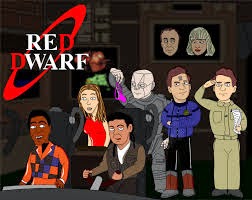
If a human were sucked into a black hole, they would be stretched out like spaghetti. Black holes (sucking you in) and white holes (spitting you out) can join together to form ‘wormholes’ which can distort space and time, as the crew of the Red Dwarf discovered in Season 6's hilarious 'Rimmerworld'.

Red Dwarf crew white hole
The Red Dwarf crew

Space Fact 1: Out of reach...

There are over 500 billion galaxies in the universe, each one containing up to trillions of stars. The Milky Way is 100,000 ly across and 1000 ly deep, containing over 100 billion stars. The sun takes 200 million years to orbit around it and the next nearest star to us is trillions of kilometers away.

It appears quite a challenge for aliens to visit us after all, and if they went to the trouble of travelling all that way, do you think they’d just hover in the sky for a moment and disappear again? Or maybe they do because they just don’t like the look of us... which is understandable!

Our galaxy: the Milky Way


Well, there you have it. I highly recommend that you take a break from whatever fiction you’re in the middle of (unless it's one of my books!) and also learn more about the ‘the miracle of science and nature’ and our place in the universe and how it works (we can never know enough eh).

Space distances, the size and number of galaxies, the speed and age of the Earth, if we’re not finding out about this stuff or aware that we can actually be experiencing it all around us, then are we spending our time here wisely? 

Do you have any Amazing Space Facts to share? Let us know...